
Service
Drone High-Rise Building Cleaning
Cleaning at height by drone where access is complex and the building remains occupied and operational.
Overview
High-rise buildings combine complex geometry, limited roof access and dense pedestrian environments. TERRABONA plans each project as a working-at-height operation with full risk management, not as a simple cleaning task.
The drone method may reduce personnel exposure to working at height where technically appropriate. It does not eliminate every access method in every project.
From a real project
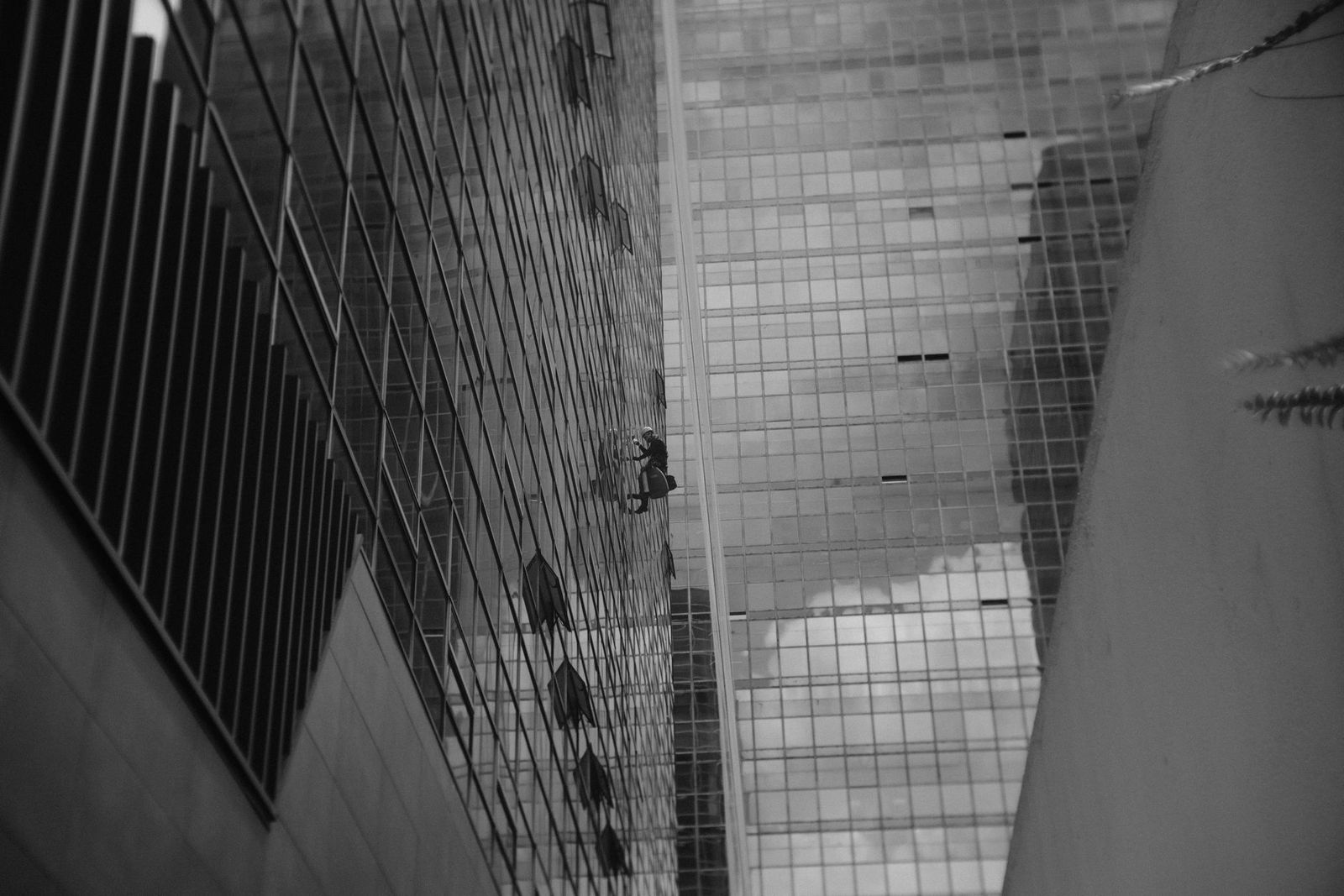
Drone cleaning a glass façade in operation
Suitable surfaces and contamination
Property types
- Office towers
- High-rise hotels
- Mixed-use towers
- Urban landmarks
- High-specification residential towers
Structural elements
- Elevations with restricted roof access
- Complex geometry and recessed areas
- Towers in dense urban fabric
- Buildings with crane installation constraints
Surfaces
- Glass
- Metal cladding
- Composite panels
- Architectural elements at height
Contamination
- Urban pollution
- Exhaust residue and soot
- Airborne dust at height
- Bird fouling
- Salt deposits
Methodology
- Airspace study including neighbouring buildings
- Wind analysis per height and per elevation
- Exclusion-zone and pedestrian-management plan
- Coordination with authorities where required
- Sectional execution with continuous condition monitoring
- Inspection, documentation and handover per phase
Technical parameters
Water and pressure
- Required water volume calculated per project phase.
- Pressure selected according to material and working height.
- Stable supply through the ground-support system.
- Backup supply for continuous operation on large projects.
Cleaning agents
- Compatibility assessed for every material on the structure.
- Products used only where technically justified.
- Owner or designer approval obtained where required.
- Application and concentrations fully documented.
Limits and weather
- Increased wind sensitivity at greater working heights.
- Real-time weather monitoring during the mission.
- Airspace assessment in dense urban environments.
- Flight restrictions near infrastructure, helipads or airports.
Access and zones
- Exclusion zones on pavements, roads and entrances.
- Coordination with authorities for temporary traffic measures where needed.
- Take-off and landing points with controlled access.
- Communication protocol between pilot, observer and ground team.
Environment
- Overspray drift modelled for the working height.
- Protection of public space and vehicles.
- Runoff plan for urban drainage systems.
- Chemical use minimised in public environments.
Operational disruption
- Works carried out in low-activity windows.
- Sectional coverage so entrances remain open.
- Occupants, visitors and neighbouring properties informed.
- Defined stop-and-resume procedure for interruptions.
Quality control
- Zone-by-zone inspection from the air and from ground level.
- Points requiring an alternative access method recorded.
- Before-and-after documentation per section of the structure.
- Final report covering conditions, equipment and outcomes.
Maintenance
- Periodic cleaning programme based on exposure.
- Surface condition monitored between cycles.
- Framework agreements for recurring works.
- Integrated into the property's annual maintenance plan.
Information required for assessment
- Total height and number of floors
- Available ground space for exclusion zones
- Pedestrian and vehicle traffic
- Airspace restrictions and nearby helipads
- Site-specific wind conditions
Frequently asked questions
Is there a height limit?
Operating limits depend on the platform, local approvals and site conditions. They are confirmed during project assessment.
How are pedestrians protected?
Through exclusion zones, signage, marshals and coordination with building management and authorities where required.
What happens if the weather changes?
Work is suspended against predefined limits and rescheduled.
Assessment
Start your project assessment
Submission of project information does not constitute acceptance, approval or confirmation. Every project is subject to technical, commercial, regulatory, safety and operational assessment.